

Introduction
Friends of the Earth Ghana implemented the GLA Project in five communities within the Bia West District of Ghana with the aim of strengthening community participation in environmental governance and promoting multi-stakeholder dialogue. The project focused on empowering communities to actively engage in discussions and decision-making processes related to natural resource management and environmental sustainability.
Multi-Stakeholder Engagement Dialogue
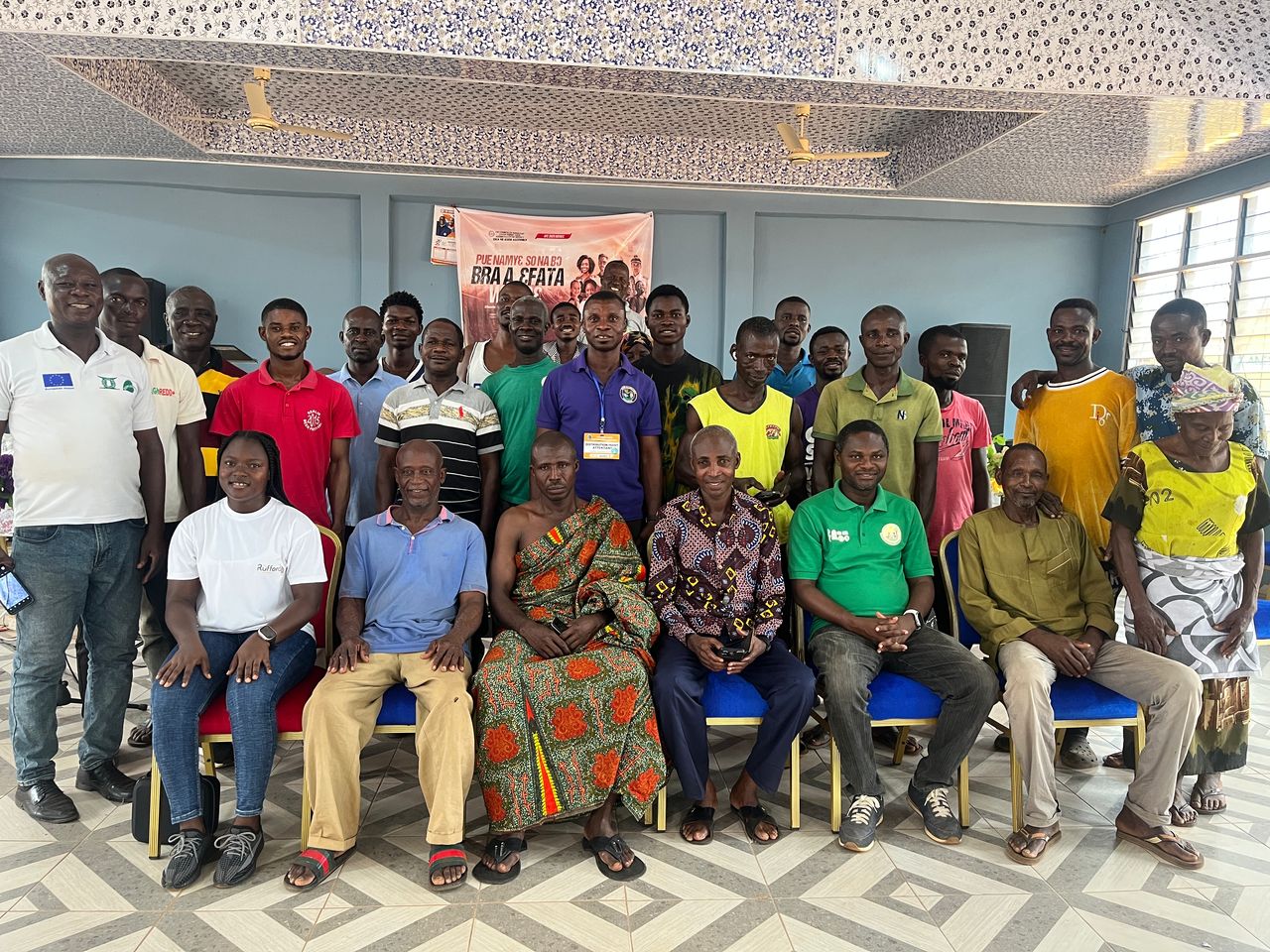
Central to the project were Multi-Stakeholder Engagement Dialogues (MsED) that brought together farmers, traditional leaders, local authorities, law enforcement agencies, and environmental stakeholders. This dialogue created space for open discussions on environmental challenges affecting communities and encouraged collaborative problem-solving. Participants gained a deeper understanding of their role in protecting natural resources and promoting sustainable development. Youth participation was a notable strength of the project. Young people actively contributed to discussions and demonstrated strong interest in environmental leadership and sustainability. The project also emphasized the importance of inclusive participation, particularly the involvement of women and youth in environmental decision-making processes.

The Project Coordinator leading discussions during a Multi-Stakeholder Engagement Dialogue (MsED) on environmental governance and sustainable natural resource management in Bia West District.
Community Voices on Environmental Challenges
Community members identified several pressing environmental concerns, including illegal mining, illegal logging, deforestation, and water pollution. Farmers expressed concern over declining agricultural productivity linked to environmental degradation, as well as challenges in reporting environmental crimes due to fear of retaliation. These insights highlighted the importance of placing communities at the center of environmental governance systems.

Engagement with community members sharing lived experiences of environmental challenges
Agroecological Methods of Farming for Sustainable Livelihoods
To support sustainable livelihoods, the project included awareness and training sessions on Agroecological Methods of Farming (AMF). Participants were introduced to practices that enhance productivity, strengthen resilience to climate change, reduce environmental impact, and promote food security. Farmers noted that the program has been highly beneficial, as they no longer rely on expensive inorganic chemicals. Instead, they now use the organic pesticide techniques introduced during the training, which has also helped them reduce costs and save money. This component reinforced the link between sustainable agriculture and long-term environmental protection.
However, farmers noted that the process of preparing the organic pesticide is relatively complex and time-consuming, which may limit wider adoption if not addressed. They therefore recommended the introduction of simplified preparation methods, including the use of appropriate tools or small-scale mechanization to improve efficiency and ease of use.
This presents an opportunity for further support and innovation to scale Agroecological Methods of Farming and strengthen sustainable agricultural transformation in the district with potential to extend benefits to other farming communities across Ghana.
The video below captures a farmer’s testimony on how Agroecological Methods of Farming have improved farming practices and livelihoods.
A Farmer shares how Agroecological Methods of Farming training has improved farming practices and reduced reliance on inorganic chemicals.
Radio Sensitization and Environmental Awareness
Radio programs via Agooha 93.7FM were used as a key communication tool to reach wider rural audiences. Topics included illegal logging, illegal mining, wildlife conservation, and climate change adaptation. These discussions helped raise awareness and encouraged community-wide engagement in environmental protection efforts.

Radio sensitization program on environmental awareness at the Agooha 93.7 FM in the Bia West District
Conclusion
The GLA Project underscores the importance of community empowerment in achieving effective environmental governance, particularly in enabling meaningful participation in decisions that shape local environments and livelihoods.
We remain committed to supporting communities in building resilience, protecting natural resources, and advancing sustainable development in the Bia West District and across Ghana.